Scaffold
AI-powered task initiation for cognitive overload
A UX case study exploring how AI reduces cognitive load by translating intention into concrete first steps.
The Barrier to Entry
Initiating tasks requires a complex orchestration of executive function: prioritizing, breaking down steps, and regulating emotion.
For individuals experiencing cognitive overload or executive dysfunction, this threshold becomes impassable.
The intention to act is present—but the ability to begin is blocked.
Research Approach
• Generative interviews
• Contextual inquiry
• Cognitive walkthroughs
• Thematic synthesis
Key Insights
Tasks are avoided due to unclear first steps
Ambiguity creates immediate avoidance.
Cognitive overload reduces decision-making
Planning requires resources that are unavailable during overwhelm.
Tools assume too much executive function
Users are expected to organize before receiving support.
Persona — Alex

Name: Alex
Age Range: Late 30s–mid 40s
Life Context: Highly capable adult with a history of responsibility, caregiving, or independence
Health / Neuro Profile: Executive functioning challenges related to neurodivergence, chronic illness, trauma, and mental health conditions
Alex is a highly capable adult who has spent much of their life being responsible, reliable, and self-sufficient.
Despite strong problem-solving ability, Alex experiences recurring cognitive shutdown—moments where starting even simple tasks becomes neurologically inaccessible.
Triggers include:
• unexpected demands
• high cognitive load
• on-demand communication
• unclear starting points
Alex thrives with:
• predictability over urgency
• autonomy and consent
• low cognitive load
• validation of effort
“I’m capable—but only when my nervous system feels safe.”
Understanding the Breakdown
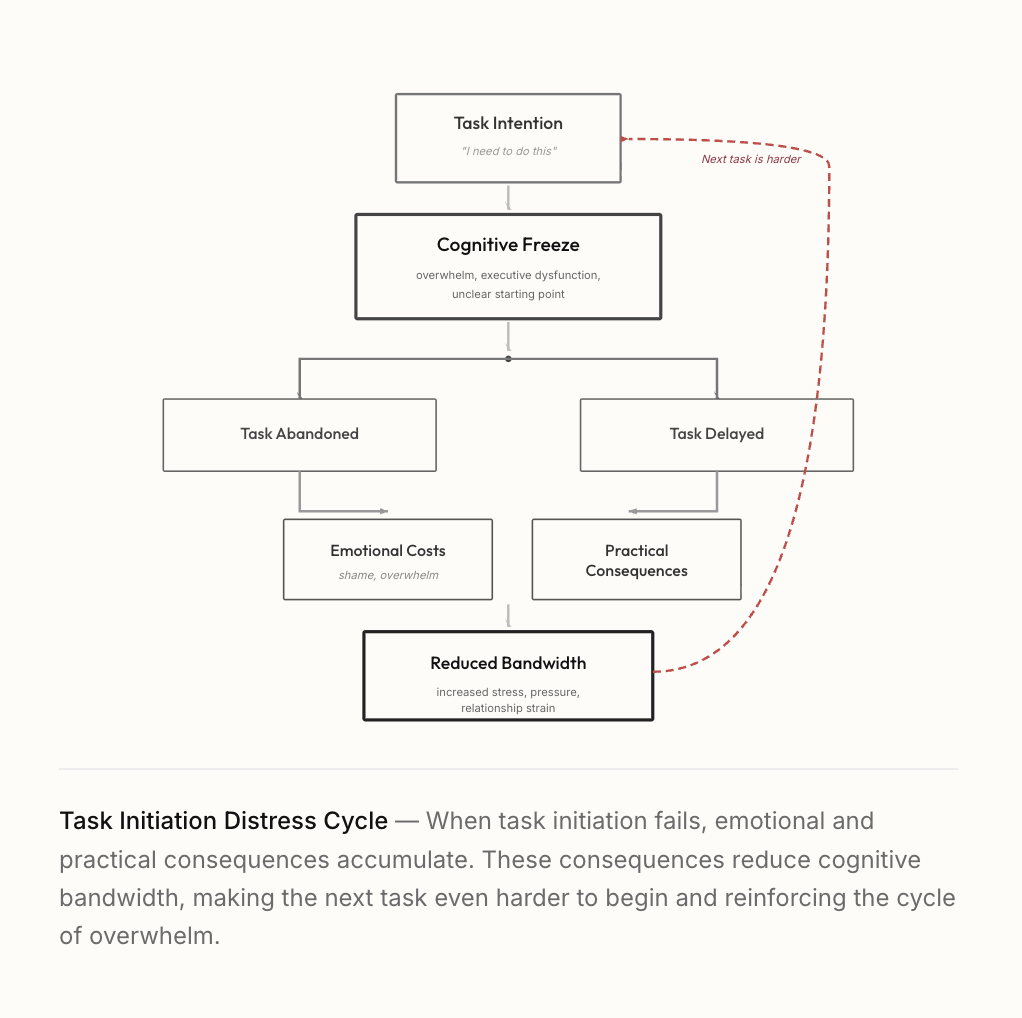
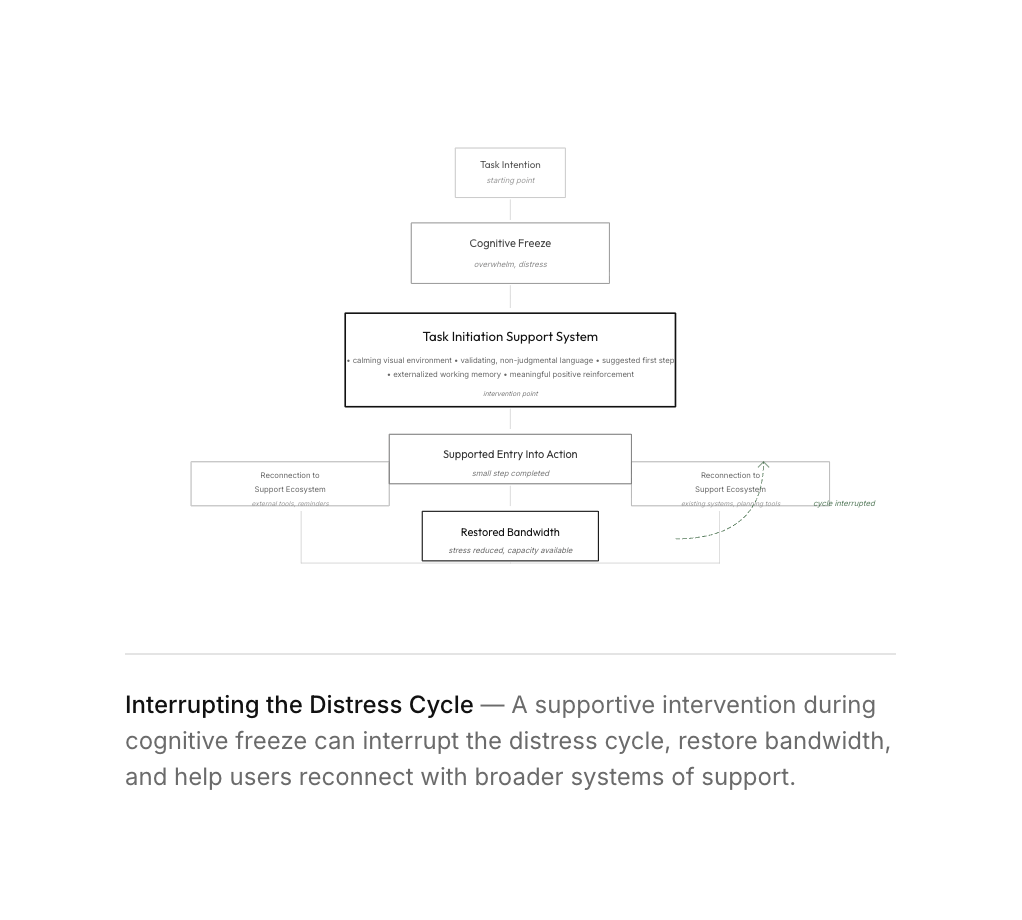
Interrupting the Distress Cycle
When task initiation fails, emotional and practical consequences accumulate, reducing cognitive bandwidth and reinforcing cycles of overwhelm.
Intervention
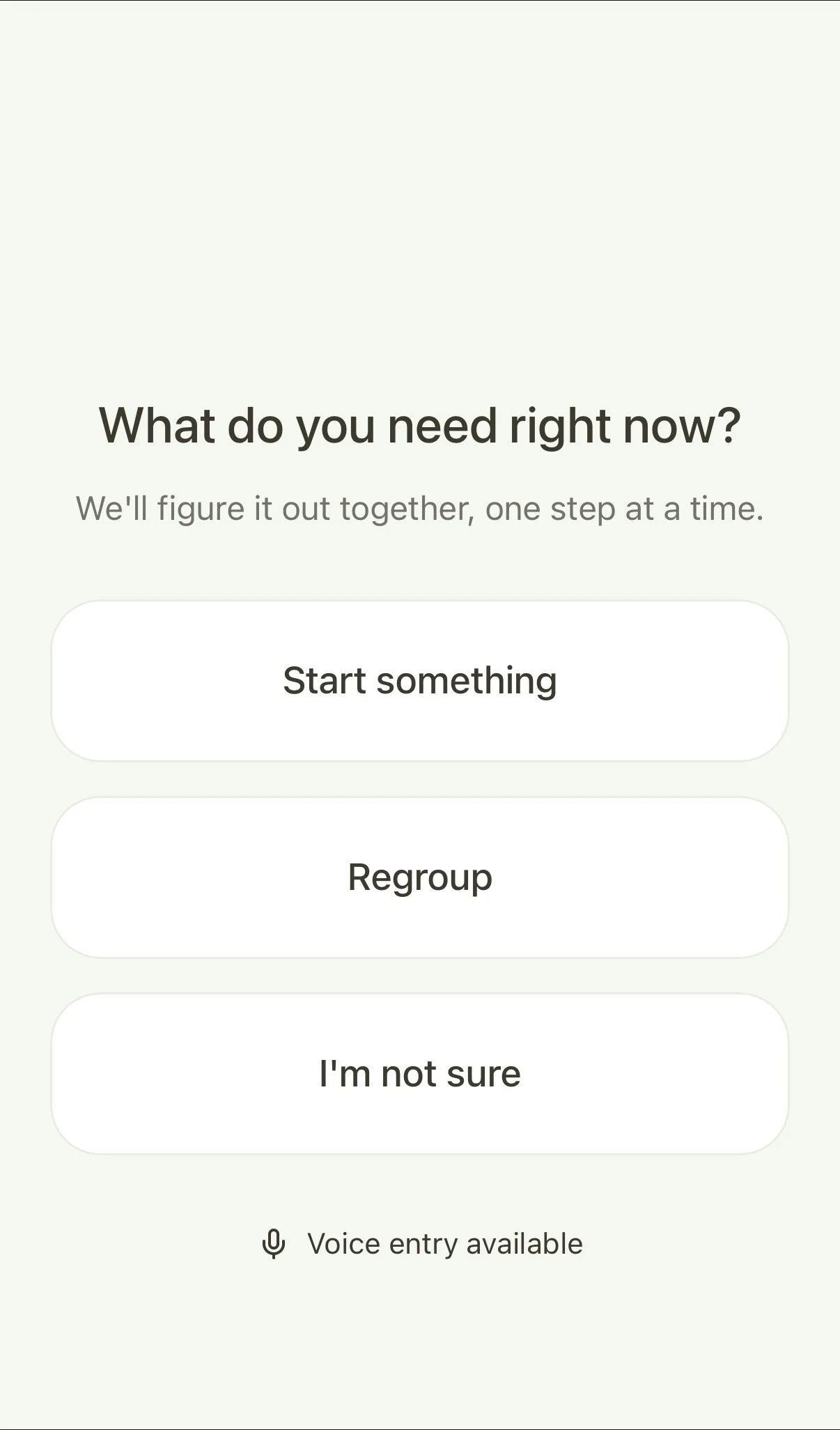
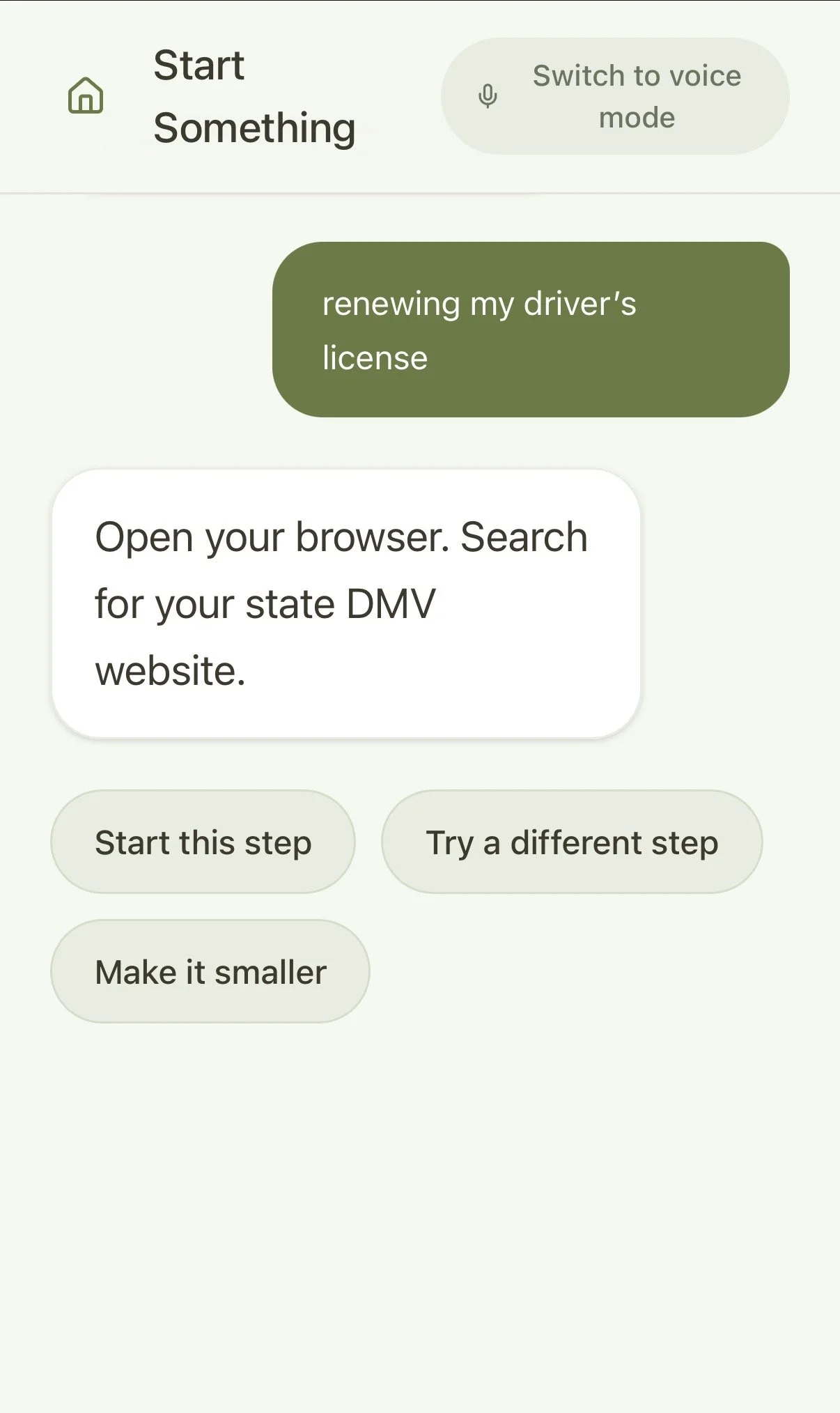
Scaffold interrupts this cycle at the moment of cognitive freeze.
Instead of requiring planning, the system:
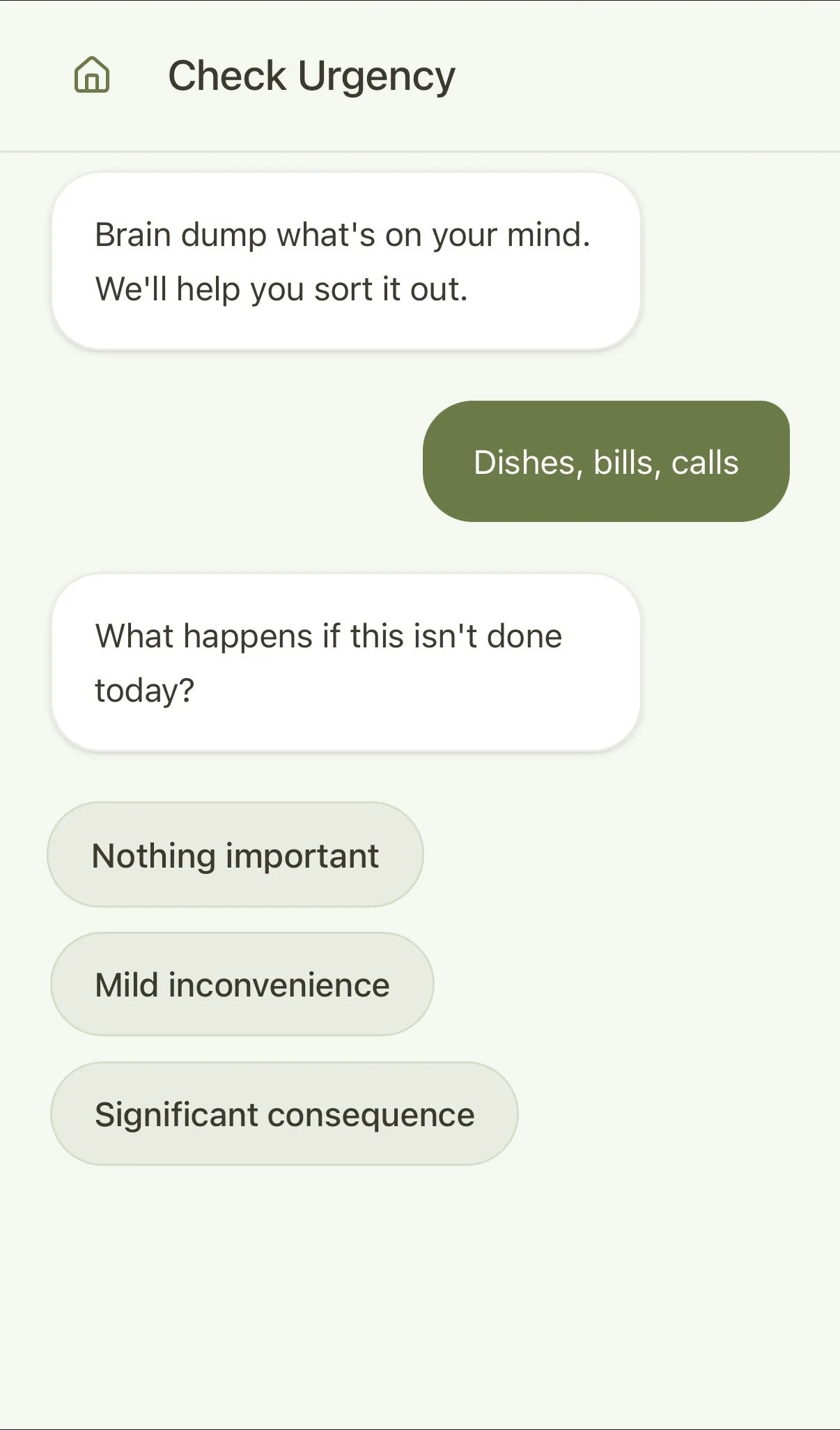
• suggests a single first step
• reduces ambiguity
• externalizes cognitive load
• supports regulation
A supportive intervention restores bandwidth and reconnects users with action.
Task Initiation Distress Cycle
When task initiation fails, emotional and practical consequences accumulate, reducing cognitive bandwidth and reinforcing cycles of overwhelm.
Intervention
Scaffold interrupts this cycle at the moment of cognitive freeze.
Instead of requiring planning, the system:
• suggests a single first step
• reduces ambiguity
• externalizes cognitive load
• supports regulation
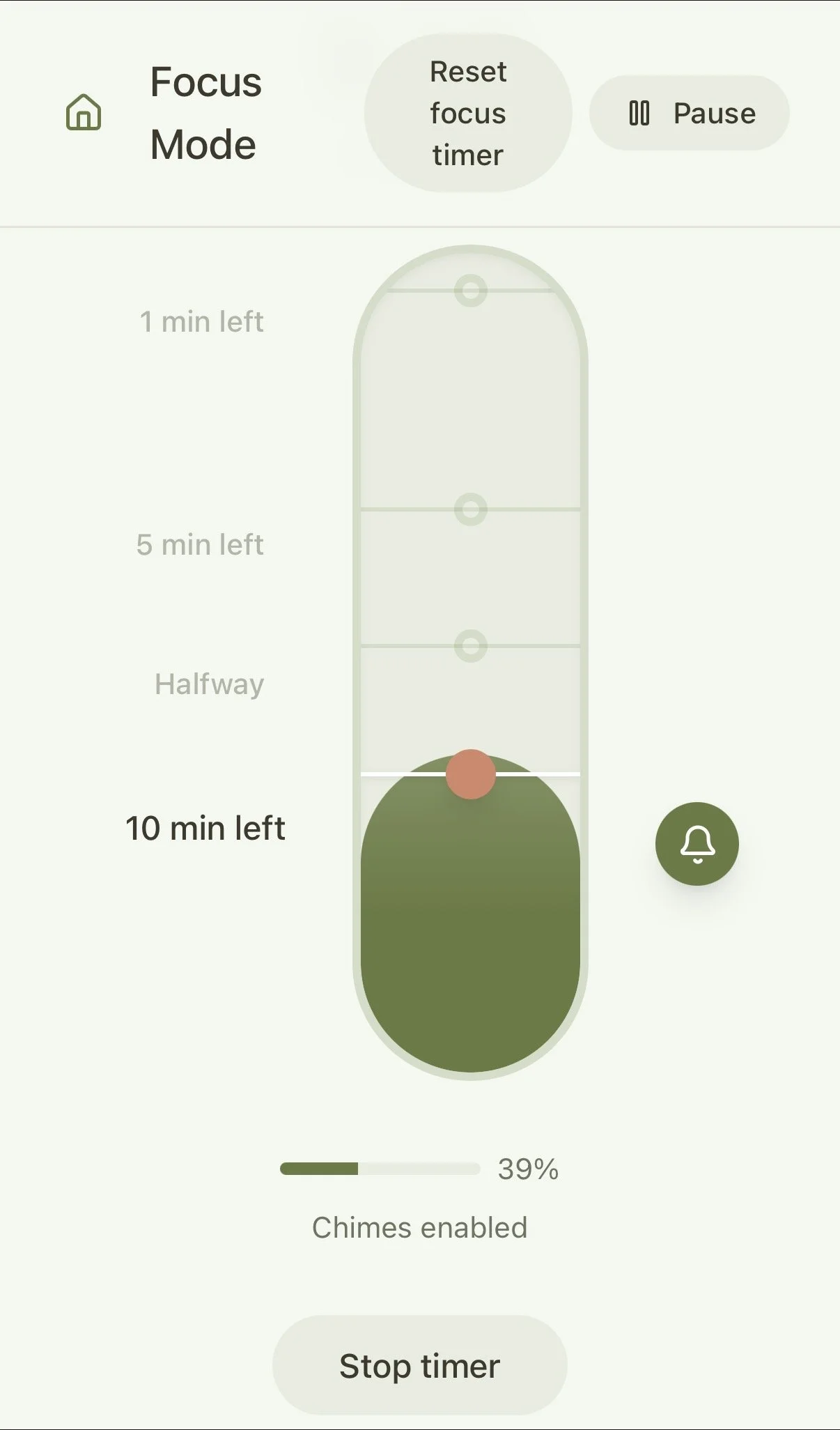
Scaffold Prototype
Outcome
By reducing the cognitive barrier to entry, Scaffold enables users to move from intention to action with less friction.